Does your Subaru have a timing belt or a chain? Model by model, and when it is due
Which Australian-delivered Subarus have a timing belt and which have a chain, when the belt is actually due, and the two generations everyone gets wrong.
Published
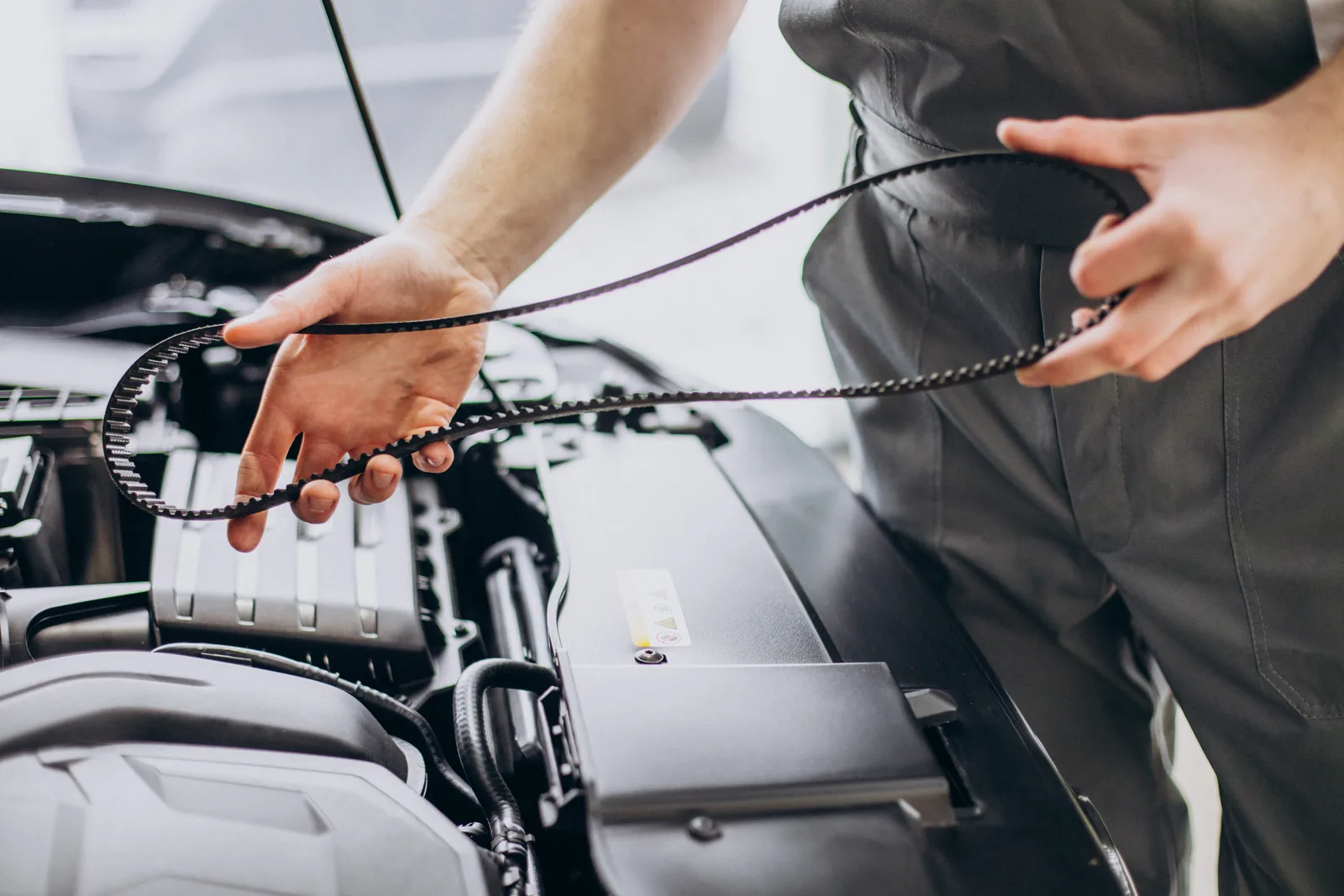
Ask this question online and you will get three different answers, at least one of which is about an American car. It matters, because a timing belt is a scheduled replacement that costs somewhere between five hundred and thirteen hundred dollars, and skipping it on the wrong engine turns into a replacement engine.
Here is the Australian version, model by model.
The short answer
If your Subaru has an EJ engine, it has a timing belt. If it has an FB, an FA, one of the EZ six cylinders, or the 2.0 diesel, it has a chain.
That rule holds for almost every Subaru sold here, but there are two traps. The 2014 to 2021 WRX has a chain while the STI parked next to it in the same showroom has a belt. And the 2.0 diesel has a chain, not a belt, whatever half the internet tells you.
The table
Australian-delivered cars, by model and generation.
Impreza
| Generation | Years (AU) | Engine | Belt or chain |
|---|---|---|---|
| GC / GF / GM | 1993 to 2000 | EJ15, EJ16, EJ18, EJ20 | Belt |
| GD / GG | 2000 to 2007 | EJ201, EJ204 | Belt |
| GE / GH / GV | 2007 to 2011 | EJ204 | Belt |
| GP / GJ | 2012 to 2016 | FB20 | Chain |
| GK / GT | 2016 to 2023 | FB20 | Chain |
| Current | 2024 onward | FB20 | Chain |
WRX and STI
| Generation | Years (AU) | WRX | STI |
|---|---|---|---|
| GC8 | 1994 to 2000 | EJ205, belt | EJ207, belt |
| GD / GG | 2000 to 2007 | EJ205, then EJ255 from MY06, belt | EJ207, belt |
| GE / GV | 2008 to 2014 | EJ255, belt | EJ257, belt |
| VA | 2014 to 2021 | FA20F, CHAIN | EJ257, BELT |
| VB | 2022 onward | FA24F, chain | No STI offered |
Forester
| Generation | Years (AU) | Engine | Belt or chain |
|---|---|---|---|
| SF | 1997 to 2002 | EJ20, GT EJ205 | Belt |
| SG | MY03 to 2008 | EJ251 / EJ253, XT EJ255 | Belt |
| SH | 2008 to 2012 | EJ253 and EJ255 petrol | Belt |
| SH | 2010 to 2012 | 2.0D EE20 diesel | Chain |
| SJ | Jan 2013 to 2018 | FB25, XT FA20F, 2.0D EE20 | Chain |
| SK | 2018 to 2024 | FB25, FB20 e-Boxer hybrid | Chain |
| Current | 2025 onward | FB25 and hybrid | Chain |
Liberty and Outback
| Generation | Years (AU) | Engine | Belt or chain |
|---|---|---|---|
| BC / BD / BG | 1989 to 1998 | EJ22, EJ20 | Belt |
| BE / BH | 1998 to 2003 | EJ25 | Belt |
| BE / BH | 2000 to 2003 | H6 EZ30 | Chain |
| BL / BP | 2003 to 2009 | EJ253, GT EJ20X or EJ20Y, then GT spec.B EJ255 | Belt |
| BL / BP | 2003 to 2009 | 3.0R EZ30R | Chain |
| BM / BR | 2009 to Dec 2012 | EJ253 | Belt |
| BM / BR | Dec 2012 (MY13) on | FB25 | Chain |
| BM / BR | 2009 to 2014 | 3.6R EZ36, and 2.0D EE20 from Nov 2009 | Chain |
| BN / BS | 2015 to 2020 | FB25, EZ36, EE20 diesel | Chain |
| BT (Outback) | 2021 onward | FB25, XT FA24F from 2023 | Chain |
Everything else
| Model | Years (AU) | Engine | Belt or chain |
|---|---|---|---|
| XV (GP) | 2012 to 2017 | FB20 | Chain |
| XV (GT) | 2017 to 2023 | FB20, hybrid from 2020 | Chain |
| Crosstrek | 2023 onward | FB20 and hybrid | Chain |
| BRZ (ZC6) | 2012 to 2021 | FA20D | Chain |
| BRZ (ZD8) | 2022 onward | FA24D | Chain |
| Levorg | 2016 to 2020/21 | FB16DIT and FA20F | Chain |
| Tribeca | 2006 to 2014 | EZ30R, then EZ36 | Chain |
| Exiga | 2009 to 2012 | EJ25 | Belt |
| Solterra | 2024 onward | Electric | Neither |
The two that everyone gets wrong
The VA WRX and STI, 2014 to 2021
This is the one that catches even experienced mechanics. In that generation, the WRX moved to the chain-driven FA20F, while the STI kept the belt-driven EJ257 right through to the EJ25 Final Edition in 2021. Two cars sold side by side in the same showroom, same badge on the boot, and one of them has a scheduled belt replacement that the other does not.
If you own a VA STI, you have a timing belt. If you own a VA WRX, you do not.
The 2.0 litre diesel
The EE20 diesel, sold here in the Outback from November 2009 and the Forester from 2010, uses a timing chain. It gets reported as a belt constantly, probably because people assume anything with EE or EJ in the name is a belt engine.
That does not mean it is trouble free. Chain tensioner problems on this engine are well documented, and a chain job costs more than a belt job. It just is not on a scheduled replacement.
When is the belt actually due? 100,000km or 125,000km?
Both numbers are circulating because both have been correct, at different times.
- EJ engines built before roughly 2006: 100,000km or 4 years.
- EJ engines from roughly 2006 onward: 125,000km or 5 years.
There is a second reason 125,000 is lodged in Australian owners' heads. Subaru Australia's capped price servicing ran A through to J at 12,500km steps, and a full cycle is exactly 125,000km. The number stuck.
Worth knowing, if you have gone looking: Subaru Australia's own warranty and service handbook does not put a kilometre trigger against the belt at all. The line simply reads "camshaft drive belt (replace if applicable)" and is marked as an inspection item at every service. The replacement figure lives in your model's owner's manual, not in the service handbook. Which is why so many people cannot find a straight answer.
The part people forget
There is a time interval as well as a distance one, and on older cars it usually arrives first. A 2010 STI sitting on 70,000km is sixteen years old. Rubber ages whether you drive the car or not, and a garage-kept low kilometre car is not exempt.
Ignore the American number too. US references quote 105,000 miles, which is about 169,000km. That is not the Australian figure and it is not the figure we would work to.
What we do here: on any belt-driven Subaru where we do not have full documented history, we replace at 100,000km or 5 years, whichever comes first. Manufacturer intervals are a maximum, not a target, and on a car with an unknown belt the downside is not a bill, it is an engine.
Why the water pump comes out with the belt
On EJ engines the water pump is driven by the timing belt and sits behind the timing covers. Replace the belt without it and, when the pump eventually leaks, you pay the entire belt job labour a second time to get back in there.
A proper Subaru timing belt kit is not just a belt. It contains the belt, the hydraulic tensioner, the smooth and toothed idler bearings, every camshaft seal and the front crankshaft seal. On top of that we would normally do the water pump and coolant, the thermostat, and the accessory drive belts while the front of the engine is open.
The reason for doing the whole kit is simple. If an idler bearing seizes or the tensioner fails, the outcome is identical to the belt snapping. Fitting a new belt onto sixteen-year-old bearings is not a saving.
What happens if it snaps
The camshafts stop. The crankshaft keeps turning. Valves stop moving while pistons keep coming up to meet them.
Treat every belt-driven Subaru realistically still on Australian roads as an interference engine. That means bent valves in one head or both, often damaged pistons and guides. On a boxer that is both heads off, and once you are that far in the economics usually favour a replacement engine over a repair.
You will find charts online claiming Subaru SOHC 2.5 engines are "free-wheeling" and survive a snapped belt. Some of them are still being copied around. We would not bet an engine on it. There are plenty of documented bent-valve outcomes on SOHC 2.5s, and the only genuinely non-interference Subaru engine sold here was the pre-1997 2.2.
There is a sting in the tail as well. Because the water pump is belt driven, a seizing pump can shear a perfectly good belt, and a snapped belt stops the pump, so overheating can pile on top of the valve damage.
Put the numbers next to each other. A full belt kit with a water pump is around a thousand dollars. A replacement engine is not.
Will it warn you first?
Honestly, the belt itself usually gives no warning at all. The parts around it do, and these are what to listen for.
- A rattle or slap from the front of the engine on cold start, easing as it warms up. Classic hydraulic tensioner losing pressure. This is the most common genuine warning you will get.
- A whine or squeal. An idler pulley bearing on the way out.
- Oil weeping at the front of the engine. Cam or crank seals. Oil on a rubber belt destroys it, which is why the seals are in the kit.
- A coolant weep or a sweet smell from the front. The water pump seal starting to go, behind the covers.
- Rough idle, misfire or hard starting. At this point the belt has probably already jumped a tooth. Stop driving it and call us.
Chains are not maintenance free
This is the assumption that costs people money. "It has a chain, so I never have to think about it" is only half right. A chain is not on a replacement schedule. It is still a wear item.
What actually fails is the hardware around it: the plastic-faced guides, and the hydraulic tensioners that depend on oil pressure to work. A timing chain kit for the FA20 contains four guides and two tensioners per engine, which tells you exactly how Subaru thinks about them. Chains also stretch, and a stretched chain shifts the cam timing.
The root cause of most of it is oil. A low oil level or oil that is well overdue wrecks the oil-controlled systems on these engines, and the variable valve timing is the first thing to complain.
Symptoms on a chain engine
A rattle from the front of the engine on cold start, fading as oil pressure builds.
Rough or unstable idle, hesitation, loss of power.
Check engine light, often with the traction control and hill assist lights lit at the same time.
Fault codes P0016 through P0019, which are crankshaft and camshaft position correlation codes.
The order of diagnosis matters here, and it is where an owner can save real money. Oil level and condition first. Then the oil control valve. Then the sensors. Only then the chain itself. An oil service and an oil control valve resolve a lot of P0016s, and those are a fraction of the cost of going into the timing case.
When a chain genuinely does need doing, expect it to cost roughly double a belt job.
What it costs
Published Australian ranges for a Subaru timing belt start around $550 and run past $1,300 depending on how much has to come off the front of the engine. Timing chain work runs roughly $1,200 to $2,000.
[CONFIRM WITH RANDIKA: insert our current pricing. Suggested breakdown, because nobody else in this market publishes one: belt only SOHC, belt only DOHC, belt kit with bearings, belt kit with water pump and coolant. Splitting SOHC and DOHC is worth doing because the turbo and STI engines are consistently a couple of hundred dollars dearer and saying so builds trust.]
If you are not sure what your car has or when it was last done, bring it in. Checking which engine is in front of us and what the history shows takes a few minutes and the initial diagnostic is free.
Not sure what your Subaru has? Bring it in and we will tell you in a few minutes. Baywrex, Tower 2 / 591 Dorset Road, Bayswater North VIC 3153. Call 0410 164 954.
Subaru specialists. Timing belts, engine rebuilds and logbook servicing for WRX, STI, Forester, Outback, Liberty, Impreza, XV and BRZ. Book a free initial diagnostic if you are not sure what your car has.
Common questions
- Does my Subaru have a timing belt or a timing chain?
- If it has an EJ engine it has a belt. If it has an FB, FA, EZ six cylinder or the EE20 2.0 diesel, it has a chain. The exceptions to watch are the 2014 to 2021 WRX, which has a chain while the STI of the same years has a belt, and the 2.0 diesel, which has a chain despite being commonly listed as a belt.
- Is the Subaru timing belt due at 100,000km or 125,000km?
- Both figures apply to different cars. EJ engines built before around 2006 are 100,000km or 4 years. From around 2006 onward it is 125,000km or 5 years. The time interval matters as much as the distance, because the belt ages whether the car is driven or not. On a car with no documented belt history we replace at 100,000km or 5 years.
- Should the water pump be replaced with the timing belt?
- Yes, on EJ engines. The water pump is driven by the timing belt and sits behind the timing covers, so replacing it later means paying the whole belt job labour again. The same applies to the idler bearings and the tensioner, since a failure in any of them does the same damage as a snapped belt.
- What happens if a Subaru timing belt breaks?
- Every belt-driven Subaru you are likely to encounter in Australia is an interference engine, so the pistons strike open valves. That usually means bent valves in one or both heads and often damaged pistons. On a boxer engine both heads have to come off, and a replacement engine is frequently the cheaper outcome.
- Do Subaru timing chains ever need replacing?
- Chains are not on a scheduled replacement, but the guides and hydraulic tensioners are wear items and chains do stretch. Symptoms are a cold start rattle from the front of the engine, rough idle and P0016 to P0019 fault codes. Oil condition is the usual root cause, so oil and the oil control valve are checked first. A chain job costs roughly double a belt job.
- How much does a Subaru timing belt cost in Australia?
- Published Australian ranges start around $550 and run past $1,300 depending on the engine and how much has to be removed. Turbo and DOHC engines cost more than SOHC. Timing chain work is generally $1,200 to $2,000.