
Subaru clutch: how to tell it is going, and what it costs to do properly
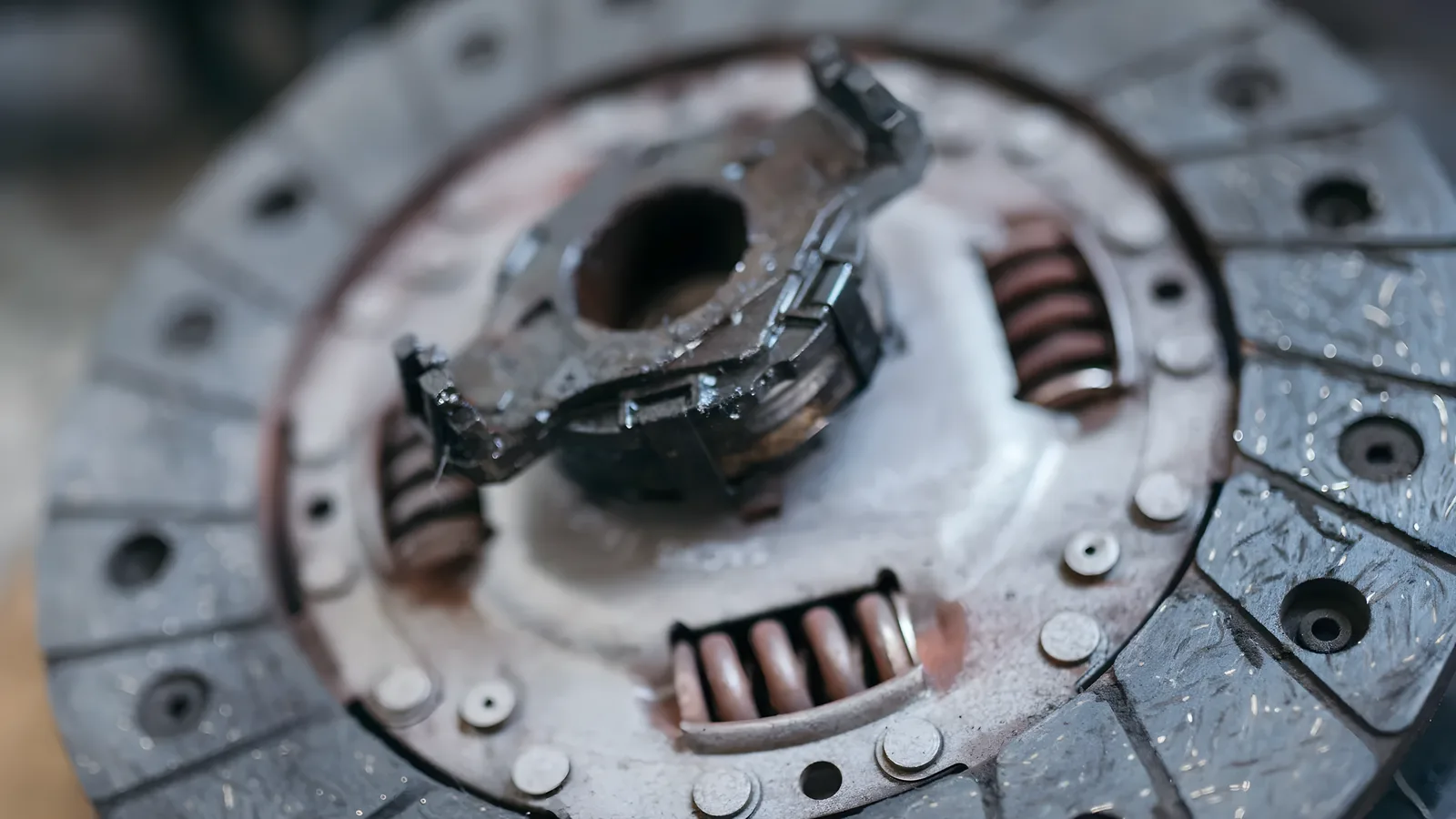
A rising bite point, slipping uphill, judder on take off. What each symptom means on a Subaru, what the job should include, and what it actually costs.
Published
The first honest warning is the bite point rising. The pedal starts engaging higher than it used to. On its own that is not a verdict, but it is the cue to pay attention. After that comes the burning smell, and by the time it smells the flywheel has usually been damaged too.
- The first honest warning is the bite point rising. On its own it is not a verdict, but it is the cue to pay attention.
- The point of no return is slipping under load, and the fastest place to notice it is a hill in a higher gear.
- A pedal that goes to the floor is usually hydraulics, and on a Subaru the slave cylinder is a bolt on repair rather than a gearbox out job.
- A Baywrex clutch replacement is $1,200 to $2,000, and the quote includes the flywheel and the seals.
Almost nobody books a clutch when they first notice something. They book it about four months later, after the smell.
The gap between those two moments is worth real money, because a clutch caught early is a clutch and a machined flywheel, and a clutch caught late is often a clutch, a new flywheel, and sometimes a gearbox repair on top. Here is how to tell where you are.
The short answer
The first honest warning is the bite point rising. The pedal starts engaging higher than it used to. On its own that is not a verdict, but it is the cue to pay attention.
The point of no return is slipping under load, and the fastest place to notice it is a hill in a higher gear than you would normally use. After that comes the burning smell, and by the time it smells the flywheel has usually been damaged too.
A pedal that goes to the floor is usually not the clutch at all. On a Subaru that is almost always hydraulics, and the good news is the slave cylinder is bolted to the outside of the gearbox, so it is a bolt on repair rather than a gearbox out job.
Symptoms, in the order you notice them
1. The bite point rises
As the friction material thins, the pressure plate diaphragm sits further forward and the clutch starts engaging higher in the pedal travel. Most people adapt to this without consciously noticing, which is why it almost never prompts a phone call.
On its own it is not a verdict. It is the point at which to start watching for the next one.
2. Slipping under load
Revs climb and road speed does not follow. It shows up first in a higher gear at low speed and on a hill, because those are the conditions with the most torque and the least road speed, and they expose a marginal clutch before anything else does. If you commute anywhere east of here, the hills will find it before the flat roads do.
3. The burning smell
An acrid smell, sometimes with smoke. This is not an early warning, it is a late one. By the time it smells, the friction material has been damaged by heat and a glaze has usually formed on the flywheel and pressure plate faces as well.
That is why "it did it once and then stopped" is false comfort. It stopped because you changed how you were driving, not because anything healed.
4. Judder on take off
Shuddering as the clutch engages. This has its own section further down, because the causes are more interesting than the symptom and the most common one is not the clutch.
5. A heavy pedal
Usually the pressure plate diaphragm at the end of its useful travel, a worn fork or pivot ball, or a dry or binding release mechanism. Worth knowing: if the car has had an upgraded clutch fitted, a heavier pedal may simply be normal for the part in it.
6. A pedal that goes to the floor
This one is different, and it is worth separating out. A pedal with no pressure is usually hydraulic rather than clutch wear. Fluid under the car points to the slave cylinder. Fluid in the footwell points to the master.
Not always, though. We have seen a Forester arrive with the pedal on the floor and a slave cylinder whose piston had popped out, because the actual failure was the clutch release fork, cracked at the ball stud. Rare, but a Subaru can do it mechanically.
7. Crunching into reverse
This means the clutch is not fully releasing, which is called drag. Reverse exposes it first because reverse has no synchromesh. First gear can mask partial drag. Reverse cannot.
There is a proper test for it, and the detail that makes it work is the pause. Engine idling, pedal fully down, wait about three seconds, then select reverse. There should be no gear rattle. Select reverse immediately and it will make a noise regardless of clutch condition, which is exactly why this gets misdiagnosed.
Noise: what it is depends on where the pedal is
This is the cleanest diagnosis in the whole subject, and you can do most of it in a car park.
| What you hear, and when | Usual suspect |
|---|---|
| Noise with the pedal up in neutral, goes away when you press the pedal | Gearbox input shaft bearing |
| Noise with the pedal down, persists in neutral | Release bearing |
| Noise in first gear with the pedal up, gone in neutral with the pedal down | Pilot or spigot bearing |
| Chirp that gets louder the further the pedal goes down | Release bearing |
| Chirp that stops as soon as the pedal is loaded | Clutch fork or pivot ball |
| Squeal when engine speed and input shaft speed differ | Pilot bearing |
| Rattle at idle in neutral, solid flywheel car | Clutch disc damper springs |
| Rattle at idle, dual mass flywheel car | The dual mass flywheel itself |
The test you can safely do yourself
Find a quiet uphill road. Select a higher gear than you would normally use, third or fourth at low revs. Apply steady firm throttle and watch the tacho against the speedo.
If the revs climb and the speed does not follow, the clutch is slipping. A healthy clutch will either pull or make the engine labour, and the two needles will move together.
Do not use the handbrake version
You will find a test online that involves the handbrake on, top gear, 2,000 rpm, and dropping the clutch. It is a legitimate workshop test and we use a version of it.
It is not a good idea on an all wheel drive Subaru in a driveway. It loads the centre differential and the whole driveline, and a car that already has a marginal clutch may have other things close to the edge. The uphill test above measures the same thing with none of the shock.
How long should a Subaru clutch last?
There is no published figure. Subaru treats the clutch as a wear item with no service interval, so anyone quoting you a number is quoting experience, not a specification.
What owner reports actually show is a spread from around 50,000 km to over 200,000 km, on the same model, with the same part. That range is the real answer, and it is more useful than a fake average because it tells you the variable is not the car.
What drives it, roughly in order:
- Number of start cycles, not distance. Traffic and hill starts dominate. This single factor is what separates a 50,000 km clutch from a 200,000 km one.
- How long the slip lasts on each take off. A clutch converts slip into heat. Long, feathered, high rev take offs cook it.
- Torque. A tune raises torque without raising clamp load. Australian clutch manufacturers are blunt that factory clutches slip after a tune generally because of a lack of clamping force.
- Launches. Maximum engine torque through a deliberately slipping disc. The exact worst case.
- Towing and load. Longer slip at higher torque on every single take off.
- Contamination. A weeping rear main seal can end a clutch at any kilometre reading. More on that below.
One counterintuitive note, from an Australian clutch manufacturer: a heavy duty clutch does not necessarily last longer than a factory one. Its job is to hold torque the factory part cannot. They quote 40,000 to 50,000 km from a heavy duty clutch in a genuinely heavy duty application.
What actually fails
- Friction disc. The wear item. Consumed by slip, then the rivets contact the flywheel and pressure plate and score them. Also killed by oil contamination and by glazing.
- Pressure plate. Loses clamp load as the diaphragm fatigues, or distorts from heat. Never reused.
- Release bearing. Fails by noise and by seizure, and on a Subaru it carries a specific consequence. A failing release bearing can wear into the gearbox snout, and historically the only fix was a replacement transmission case. There is now a whole product category of bolt in sleeve repair kits, which tells you how often it happens.
- Pilot or spigot bearing. Supports the end of the input shaft in the crank. Cheap, in the kit, and a known noise source when someone reuses it.
- Clutch fork and pivot ball. Wears at the ball socket, chirps, and occasionally breaks.
- Flywheel. Takes the heat. Warps, hot spots, scores and cracks. Runout beyond about 0.15 mm typically causes judder.
- Rear main seal. Behind the flywheel. When it weeps, the oil lands directly on the friction face. Only reachable with the gearbox off.
One piece of genuinely good news
Subaru uses an external slave cylinder, bolted to the outside of the bellhousing and acting on the release fork through a pushrod. It is not a concentric slave buried inside.
On cars with a concentric slave, a leaking slave means the gearbox comes out, so a cheap part becomes a clutch sized bill, and the usual advice is to replace it with every clutch as a matter of course. On a Subaru you are not forced into that. A failed slave is a bolt on repair, and a clutch job does not have to carry a mandatory hydraulic replacement.
Solid flywheel or dual mass?
Most of the Subarus we see, and effectively all WRX and STI, run a solid single mass flywheel. That is good for the owner. It can usually be machined, it is far cheaper to replace, and it avoids the dual mass cost entirely.
Dual mass appears on petrol Liberty, Legacy and Outback models of the early to mid 2000s, and on the EE20 diesel. Published sources disagree on exactly which years, which is probably a market difference, so it gets verified on the car rather than assumed from the year.
Can a Subaru dual mass flywheel be machined? No. The flywheel manufacturer warns that some types contain intricate parts that can be irreparably damaged by resurfacing, and that the damage often is not visible. Subaru specific guidance is blunter: on the unit fitted to these cars the friction face is held by a circlip and can be removed for bolt access, but it cannot be reassembled afterwards. Dual mass flywheels get replaced.
Even on a solid flywheel, machining is not automatic. Grinding removes material but not the internal stresses from overheating, so a flywheel that got genuinely hot is likely to distort again. Light even wear, machine it. Blueing, hot spots or radial cracks, replace it.
Pull type and push type, and why ordering by year goes wrong
On a push type the slave cylinder pushes the fork, which pushes the release bearing into the diaphragm fingers. On a pull type the motion is reversed and the bearing pulls the diaphragm outward. They are not interchangeable. The pressure plate, release bearing, fork, fork pivot and the gearbox casting all differ.
You can tell them apart physically: pull type has the slave cylinder behind the fork, pushing the top of the fork toward the front of the car. Push type has the slave in front of the fork, pushing it toward the firewall.
What we are confident of, because it is verified against parts fitment rather than a forum: turbo five speed gearboxes up to around MY2005 are pull type, and from MY2006 the five speed turbo box went push type with a different casting and a longer thrust snout. The six speed STI gearbox is pull type, 240 mm, with a nine bolt flywheel, and stayed that way through the EJ257 run.
Why we will not give you a year table
Because the published ones contradict each other, including one Australian specialist whose own tables disagree with themselves on the six speed.
More practically, Melbourne has a lot of imported GC8 and GD Subarus with swapped gearboxes, so the year on the compliance plate may have nothing to do with the box in the car. Identify the car, then identify the gearbox, then order the parts. Never the other way around.
The expensive versions of getting this wrong: a push type kit in a pull type car, where nothing fits including the bearing. A five speed kit in a six speed, where the diameter is wrong at 230 against 240 mm and the flywheel bolt count is wrong at six against nine. And a half finished pull to push conversion, where the hydraulic line and master cylinder also have to change and usually do not, leaving a car whose clutch never releases properly.
While you are in there
This is the part worth reading even if you take the car somewhere else, because it is where most of the value in a clutch job sits.
On a Subaru the labour is the bulk of the cost. Indicative book time for clutch, flywheel and bearing is somewhere around seven to nine hours, and all wheel drive pushes it toward the top of that. A rear main seal costs tens of dollars. A pilot bearing is in the kit. You pay the labour once.
So every time:
- Rear main seal. Only reachable now. A weep puts oil straight onto the friction face and ends the new clutch.
- Gearbox input shaft seal. Same problem from the other side, with gear oil.
- Release bearing and pilot bearing. Both in the kit. There is no argument for reusing either.
- Clutch fork and pivot ball, inspected and properly greased. Subaru’s own procedure specifies lubricating the splines, bearing collar and pivot ball. Undergreasing here is a leading cause of the gearbox snout damage that specialists now repair routinely.
- Gearbox snout and bearing collar checked. Wear here causes uneven engagement. Caught now, there is a sleeve repair. Caught later, it is a gearbox case.
- Flywheel machined or replaced on inspection, not by default. And new flywheel bolts when it comes off.
- Gearbox oil, and exhaust gaskets. The box has to be disturbed anyway, and on a boxer getting it out means disturbing exhaust components. Both are cheap and both are annoying to go back for.
- Engine and gearbox mounts inspected. Worn mounts let the driveline move and amplify engagement vibration. Worth noting honestly that new mounts rarely cure judder on their own if the clutch is faulty. They are a contributor, not a cure.
Leaving a weeping rear main seal in place to save a part worth tens of dollars is how a clutch that should last 100,000 km judders within a year. And the second visit costs the same seven to nine hours as the first.
Judder on take off, and why it is usually not the clutch
Judder is a stick slip oscillation at the friction interface. Anything that makes friction inconsistent across the face, or clamping force uneven, or lets the driveline move, will do it. In the order they are usually the answer:
- Contamination from a leaking seal. Rear main seal or gearbox input shaft seal. Even small amounts of oil dramatically reduce the friction coefficient. The giveaway: judder that appears cold and clears as the car warms. A contaminated disc cannot be cleaned and reused.
- Warped or hot spotted flywheel. Look for blueing and scoring. On Subaru flywheels the cracks are radial and appear on the friction face where the iron got hottest. Runout over about 0.15 mm typically causes judder.
- A glazed friction surface. Prolonged slipping melts the resin in organic material and smears it onto the flywheel and pressure plate as a hard glossy layer. This is why a new disc alone does not fix judder on a car that was driven while slipping.
- Worn engine or gearbox mounts. A contributor rather than a cause.
- Fitting error. Misalignment during installation, a disc that shifted while the box went back on, hold down clips left in place, or improper torque. More common than anyone admits.
What it costs
Honest position first: no Australian source publishes a Subaru model specific clutch price. The comparison sites run the same text on the Subaru, Impreza, Forester and WRX pages. So here is what is actually published, and what it is.
| Figure | What it is |
|---|---|
| $900 to $2,000 or more | AutoGuru’s published national range for a standard clutch replacement, identical across its Subaru model pages. They note that 4WD and SUV models cost more because they are labour intensive to remove and refit. |
| $980 | A real customer booking, 2004 Subaru Outback, clutch replacement plus extras, including GST. |
| $1,860 | A real customer booking, Melbourne, 2007 Nissan X Trail, clutch plus extras. The closest all wheel drive comparator in the public data. |
| about $1,100 | Quoted Melbourne average on one Australian quoting platform. |
| $568 to $1,130 | Australian retail price range for Subaru clutch kits, from a standard kit for a turbo Forester up to a heavy duty ceramic kit for a VA STI. |
| $2,131 | Australian retail for a heavy duty kit that includes a flywheel, for a VB WRX. The same brand and tier roughly doubles once a flywheel is in the box. |
A worked illustration, clearly labelled as one rather than a quote: seven to nine hours at typical independent workshop rates is roughly $770 to $1,350 in labour alone, before parts, consumables, flywheel machining or seals. Against parts at $568 to $980 for a mainstream kit, that puts labour at roughly half to two thirds of the bill. Which is both why the published $900 to $2,000 range is realistic, and why the "while you are in there" list matters so much.
What we charge at Baywrex
Clutch replacement: $1,200 to $2,000.
Where your car lands in that range comes down to three things. Whether it is a naturally aspirated Impreza or Forester or a turbo WRX or STI. Whether the flywheel can be machined or has to be replaced. And what the strip down actually finds behind the gearbox, because the seals and the release bearing are only visible once the box is out.
Our floor is higher than the $900 the comparison sites quote, and that is deliberate rather than an oversight. A $900 clutch on an all wheel drive Subaru is a clutch kit and the labour to swap it, with the flywheel left alone, the seals left alone and the release bearing sometimes reused. We do not quote that job, because it is the job that comes back. What we quote includes the flywheel and the seals, and the list is below.
The range is wide for the same reason every published range is wide. A clutch is a strip and assess job, not a menu item. Anyone who gives you one number over the phone is guessing, and the guess is usually low. We quote after we have looked, and we quote the inclusion list with it.
Where your car sits inside that range
The range is wide because the cars are different, not because we are hedging. In broad terms:
- Lower half. A naturally aspirated Impreza, Forester or Liberty, caught before it started smelling, with a flywheel that can be machined and resurfaced rather than replaced.
- Middle. The same car caught late, or a turbo WRX, where the parts cost more and the heat damage usually means the flywheel is finished.
- Upper end. An STI, anything needing a new flywheel rather than a machined one, a heavy duty or upgraded clutch, or a car where the strip down finds a leaking rear main seal and a worn release bearing that both have to be done while the box is out.
The single biggest swing inside that range is the flywheel. Machining a serviceable flywheel is a fraction of replacing one, and whether yours is serviceable is decided by how long the car was driven after it started slipping. That is the whole argument for booking it at the rising bite point rather than at the burning smell.
What our clutch job includes as standard
This matters more than the headline number, because it is where two quotes that look similar stop being comparable.
- Clutch kit: disc, pressure plate and release bearing. We do not reuse a release bearing.
- Flywheel machined and resurfaced, or replaced if it is past it. We tell you which before we do it, not after.
- Pilot or spigot bearing inspected and replaced as a matter of course, because it is worth very little and the gearbox is already out.
- Rear main seal and gearbox input shaft seal checked, and replaced if there is any weep at all. Leaving a weeping seal in is the most common reason a new clutch judders inside a year.
- Clutch hydraulics checked, and the fluid replaced.
- Engine and gearbox mounts inspected and reported on.
- Road test before the car goes back.
If a quote you are comparing does not say what it includes, that is worth a phone call before you compare it on price.
Upgraded clutches, and the honest trade off
If the car is tuned, towing, or on bigger tyres, a factory clutch may genuinely not hold it. The usual cause of slip after a tune is simply a lack of clamping force. Australian heavy duty clutches target something like 20 to 30 per cent more clamp load than a factory unit with pedal effort kept close to standard.
The ladder, in plain terms. Stage 1 is a heavy duty cover with an organic disc: more clamp, factory like material, factory like feel. Stage 2 moves to a cerametallic disc. Stage 3 and above move to ceramic puck or button discs, then twin and triple plate.
What a ceramic puck clutch is actually like to live with
Organic material is smooth because it slips a little on engagement. That is exactly what makes it pleasant. Cerametallic and puck discs tolerate heat far better and are, in the words of the technical literature, grabby and harsher, and can make daily driving a chore.
The engagement window shrinks from something you can feather to something closer to on or off, and rigid hub versions add chatter and make stalling on hills more likely. On Canterbury Road at five in the afternoon that is a real cost, paid every day, for a capability used occasionally.
For a stock or Stage 1 WRX, a towing Forester, or any car that commutes, a good heavy duty organic is the right answer and a ceramic is a downgrade in everything except torque capacity. It is barely cheaper either.
One trap when comparing clutches: published torque ratings are not measured the same way between brands, or even consistently within a single listing. Some are quoted at the flywheel and some at the wheels, and those are not comparable. A clutch is rated for torque rather than power, so it should be sized from crank torque with a margin. Oversizing just makes the pedal heavy.
On lightweight flywheels: the engine revs more freely and shifts feel quicker, but less stored inertia means more throttle to pull away without stalling, more gear rattle at idle in neutral, and on some FA and EJ engines the vibration can trigger false knock readings, which has tuning consequences rather than just comfort ones. A modest lightweight steel flywheel is a reasonable choice on a street car. An aggressive one is not, and the owner should be told about the idle rattle before the car goes back, not after.
Making it last
One idea covers all of this: a clutch is only consumed while it is slipping. Fully out, it wears nothing. Fully in, it wears nothing. Everything below just reduces time spent in between.
- Do not hold the car on a hill with the clutch. Use the handbrake. This is the single most expensive habit there is, because it is a stationary slip at high torque with no airflow and nowhere for the heat to go.
- Take off gently and change up as you accelerate rather than slipping it at speed.
- Keep your left foot on the floor between shifts. Resting it on the pedal is a named cause of the burning smell.
- Pedal fully down, change smoothly. Grinding gears is a clutch and a gearbox problem at the same time.
- Act on the rising bite point. A clutch replaced then is a clutch and a machined flywheel. A clutch replaced after it started smelling is often a clutch and a new flywheel, and sometimes a snout repair.
- Fix oil leaks early. A weeping rear main seal is cheap to live with and expensive to ignore, because the oil is landing on the clutch.
And the part that is not your driving
A fair amount of short clutch life is workmanship rather than driving style. An undergreased gearbox snout and fork pivot. A reused pilot bearing. A flywheel skimmed when it should have been replaced. A rear main seal left weeping because it was not in the quote. A release bearing fitted the wrong way round.
Specialists who repair worn gearbox snouts attribute the rise in that work directly to inferior clutch work, specifically not applying enough lubrication during replacement. That is not a comfortable thing for the trade to say out loud, and it is the main reason we have written out the full inclusion list above rather than just a price.
If you are getting quotes, compare what is in the job, not what is on the invoice total.
Bring it in before it starts smelling
Baywrex, Tower 2 / 591 Dorset Road, Bayswater North VIC 3153. Call 0410 164 954 or book online.
Subaru specialists. Clutch and flywheel work for WRX, STI, Forester, Outback, Liberty, Impreza, XV and BRZ. Free initial diagnostic, and we will tell you how long you have got.
- Subaru Clutch Replacement, AutoGuru
- Heavy duty clutch kits explained, 4X4 Australia
- Should a Dual Mass Flywheel be Reconditioned?, Valeo Service
- WATCH: How to care for your clutch, RAA
Also consulted
- AutoGuru real customer booking totals for Subaru Outback and Nissan X Trail clutch jobs, retrieved October 2026.
- Australian clutch kit retail pricing from Australian suppliers for Exedy, Xtreme and ClutchPro Subaru fitments, retrieved October 2026.
- Exedy clutch troubleshooting and fitting guide, including the reverse selection disengagement check and Subaru specific fitting hazards.
- Know Your Parts and Phoenix Friction technical bulletins for the noise to component mapping and contamination as the primary judder cause.
- Subaru specific specialist guidance on the circlip retained friction face of the dual mass flywheel.
- Australian and United Kingdom Subaru specialists on pull type and push type generations, flywheel types and bolt counts, cross checked against Australian parts catalogue fitment data.
- Subaru factory clutch replacement procedure, including friction material limits, lubrication of splines, bearing collar and pivot ball, and flywheel bolt torque.
- All Wheel Drive Auto on gearbox snout wear and its attribution to inadequate lubrication during clutch replacement.
- NASA Speed News on organic against cerametallic friction material behaviour and lightweight flywheel trade offs.
Common questions
- How much does a Subaru clutch replacement cost in Australia?
- Published Australian ranges put a standard clutch replacement at roughly $900 to $2,000 or more, and all wheel drive sits at the upper end because the gearbox is labour intensive to remove and refit. At Baywrex a clutch replacement is $1,200 to $2,000, and the reason our floor sits above the national one is that our quote includes the flywheel and the seals rather than a kit swap. No Australian source publishes a Subaru model specific price, so treat any precise figure you see online with care and get a quote that lists what is included.
- How long does a Subaru clutch last?
- There is no published figure and Subaru sets no replacement interval. Owner reports on the same model with the same part range from about 50,000 km to over 200,000 km. The dominant variable is not distance, it is the number of start cycles and how long the clutch slips on each take off, which is why traffic and hill starts matter far more than kilometres.
- Can a Subaru dual mass flywheel be machined?
- No. Dual mass flywheels contain internal components that can be irreparably damaged by resurfacing, often invisibly, and on the unit fitted to these Subarus the friction face can be removed for bolt access but cannot be reassembled afterwards. It gets replaced. Most Subarus, including effectively all WRX and STI, use a solid flywheel which can usually be machined if the wear is light and even.
- Is my clutch slipping or is it the hydraulics?
- If the revs climb without the car accelerating, especially uphill in a higher gear, that is slipping. If the pedal goes soft or to the floor with no pressure, that is usually hydraulic rather than clutch wear. Fluid under the car points to the slave cylinder, fluid in the footwell points to the master cylinder.
- Does a Subaru have the slave cylinder inside the gearbox?
- No. Subaru uses an external slave cylinder bolted to the outside of the bellhousing, acting on the release fork through a pushrod. That is good news: on cars with a concentric slave inside the bellhousing a leak means removing the gearbox, whereas on a Subaru it is a bolt on repair.
- Why does my Subaru judder when I take off?
- Most often oil contamination from a leaking rear main seal or gearbox input shaft seal. The giveaway is judder that appears when cold and clears as the car warms. Other causes are a warped or hot spotted flywheel, a glazed friction surface, worn mounts and fitting error. A contaminated disc cannot be cleaned and reused, which is why the seals get done with the clutch.