
Alpine roads reopen soon: what we check on a Subaru before the High Country
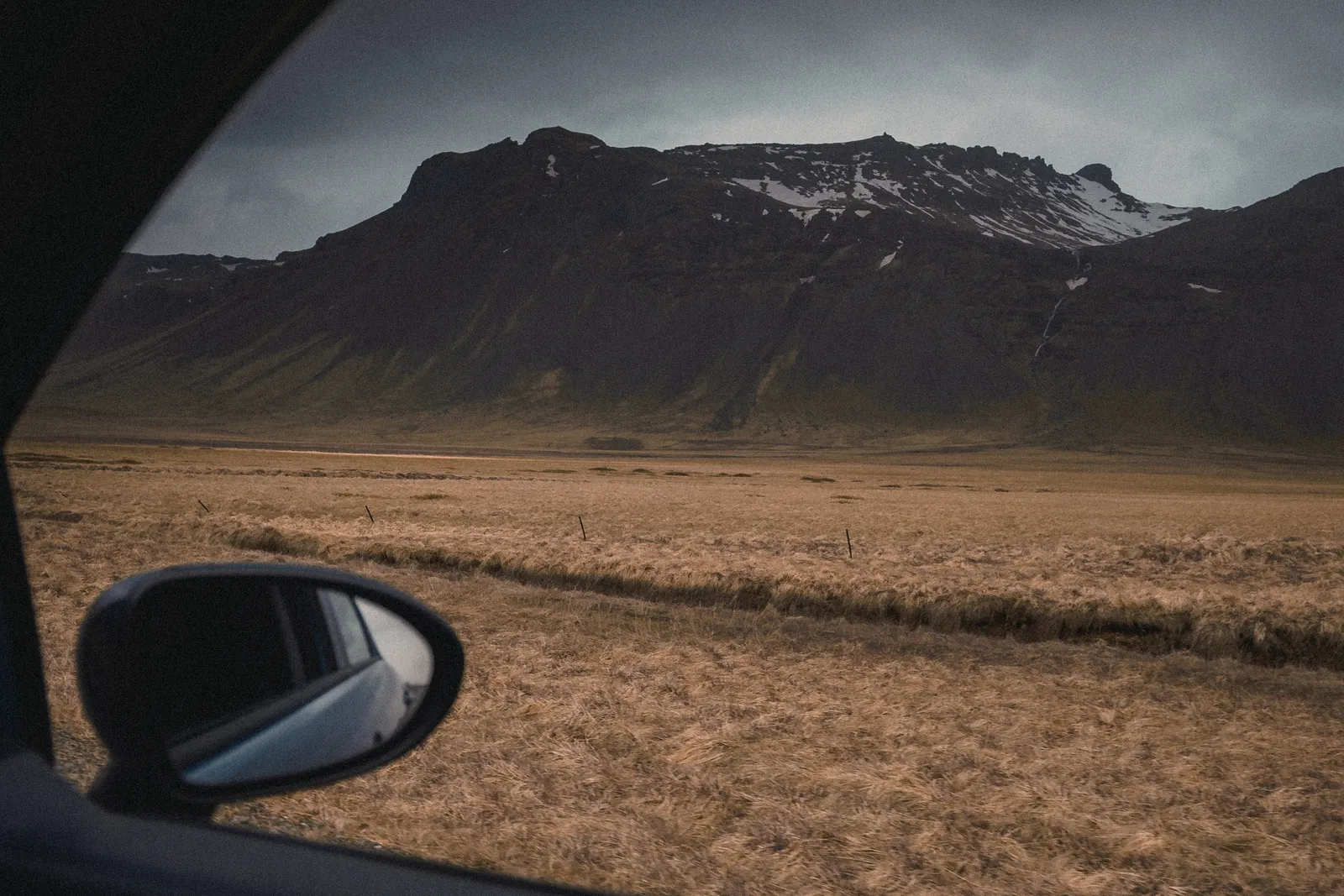
Victoria's seasonal road closures lift on 29 October 2026. What we check on a Subaru before the High Country, what breaks up there, and where a stock Subaru should not go.
Published Updated
Most of Victoria's seasonally closed park roads reopen on Thursday 29 October 2026, with 26 in the northeast on Friday 30 October, but some tracks stay shut into November and storm-damaged tracks can stay closed past their date. Check the live map, and get the car's CV boots, brakes, cooling and tyres checked first.
- Most seasonal closures lift on Thursday 29 October 2026, but some alpine tracks stay closed until mid to late November.
- Seasonal and current closures are separate, so check MapshareVic and Parks Victoria's changed conditions listing on the day you leave.
- CV boots, brakes, the cooling stack and tyres are what fail most on a Subaru in the High Country.
- A stock Subaru suits sealed alpine roads and formed gravel, not low range tracks like Billy Goat Bluff or Blue Rag Range.
- Subaru publishes no wading depth for any Australian model, so treat flood waters and deep crossings as off limits.
Victoria's seasonal road closures lift at the end of October, and every spring we get the same two phone calls. One is somebody planning a trip who wants the car looked over first. The other is somebody already up there, on a track with no phone signal, who did not.
This is what the first call should cover.
When do the alpine roads reopen in 2026?
Parks Victoria lists 341 roads under seasonal closure this year. Most closed on Thursday 11 June 2026 and most reopen on Thursday 29 October 2026. A further 26 roads in the northeast and the Kiewa and Murray area reopen one day later, on Friday 30 October.
But sixteen named tracks do not reopen until the middle or end of November, and some closed as early as 30 April. Mount Buffalo Road, by contrast, already reopened on Monday 14 September.
These dates are from the Parks Victoria 2026 list, retrieved 23 September 2026. They are not a promise. Parks Victoria says itself that closures may be extended if conditions are not suitable for a safe reopening.
Which dates do people get wrong?
You will hear that the tracks close on the King's Birthday weekend and reopen by Melbourne Cup weekend. It is a decent rule of thumb and some official Victorian pages use exactly that formula. It is not what the list says.
In 2026, 127 roads closed on Thursday 4 June, which was before the King's Birthday long weekend, not after it. And while 29 and 30 October do land within a few days of Melbourne Cup Day on Tuesday 3 November, these tracks do not reopen until much later:
| Track | Closed | Reopens |
|---|---|---|
| Davies Plain Track, central section | 30 April 2026 | Monday 30 November 2026 |
| Kings Plain Track | 30 April 2026 | Monday 30 November 2026 |
| Golden Ridge Track | 30 April 2026 | Sunday 29 November 2026 |
| Kelly Lane | 30 April 2026 | Sunday 29 November 2026 |
| King Spur Track | 30 April 2026 | Sunday 29 November 2026 |
| Shepherds Creek Track | 30 April 2026 | Sunday 29 November 2026 |
| Granite Flat Track | 14 May 2026 | Saturday 14 November 2026 |
There is a second trap, and it is the one worth remembering. Seasonal closures and current closures are two separate systems. A track can be past its published reopening date and still be shut. As at late September 2026, Cobberas Track, Macfarlane Flat Track and Ingeegoodbee Track are all closed to motor vehicles because of storm and flood damage, with no reopening timeframe, and two of them appear in the seasonal list with ordinary dates.
Then there is the fire. The Wonnangatta and Dargo Complex fires burnt more than 50,000 hectares of that country between early January and the start of February this year. The Pinnacles Lookout day visitor area is still closed for repair works to reinstate assets damaged in those fires, with reopening expected around 1 November 2026. Post fire tree fall is a live hazard across the area.
So do not plan off a date. Check the live map at MapshareVic, which covers both parks and state forests, and check Parks Victoria's changed conditions listing, on the day you leave.
Driving around a closed gate
Under the Conservation (Vehicle Control) Regulations the maximum court penalty in 2026 is $4,070. Parks Victoria authorised officers issued 200 infringement notices for illegal off road driving in restricted areas during 2025, and have flagged increased patrols and surveillance this season.
The closures exist to stop tracks being destroyed in the wet and to protect water quality. A car going through a soft track in October is what closes it for everyone in November.
What actually breaks on a Subaru up there?
CV boots most often, then water in the differentials, wheel bearings and bushes, underbody damage, heat, brakes and tyres. In rough order of how often we see it:
CV boots
The most common thing we repair after a gravel trip, and the cheapest to catch. The boot is soft rubber sitting at the outer end of the axle, right in the firing line of sticks, rocks and stubble on an overgrown track. Once it splits, grit gets in and grease gets out, and the joint then runs dry on contaminated grease.
The signs are grease flung on the ground near a wheel, a clicking noise on turns, and heavier steering. Published Australian costs for a boot replacement start around $120 and run past $300. Leave it long enough and you are replacing the whole shaft instead.
Differential and gearbox breathers
This one is invisible until it is expensive. A differential that has been working is hot. Drive it into a cold creek and the air inside contracts sharply, and the housing draws air, or water, in through its breather. Water in a differential means milky oil, corroded bearings and a failure that turns up weeks after the trip.
The four wheel drive world's standard answer is extended breathers routed high into the engine bay. On a Subaru, our practical advice is simpler: after any crossing deeper than the hubs, have the differential and gearbox oils checked. Milky oil is a same week job, not a next service job.
Wheel bearings and bushes
Corrugations fatigue everything. Shock absorbers, bolts, bushes, tyres and bearings all take a beating, and dust and water work into a bearing and degrade the grease. Published Australian costs for a Forester wheel bearing run from around $290 to $475 and up.
Underbody damage
What a Forester, Outback or Crosstrek has from the factory is a thin plastic undertray. It is an aerodynamic shield, not impact protection. What sits exposed underneath is the sump, the transmission case, both differentials, the exhaust front pipe and the fuel tank. On a boxer engine the sump sits low and flat, which is not a shape that likes rocks.
Aluminium underbody protection made in Australia for Subarus is available, with sump guards published at roughly $480 to $750 and combined sump and transmission guards higher. Whether it is worth it depends entirely on where you are actually going.
Heat, which is the one nobody checks
The radiator, the transmission cooler, the air conditioning condenser and, on turbo models, the intercooler all share one air path at the front of the car. Pack those fins with dust or block the condenser with insects and the transmission cooks on a twenty minute first gear climb while the temperature gauge still looks normal, because the gauge is heavily damped.
This matters more on a Subaru with a continuously variable transmission than most people realise. The Lineartronic clamps a steel chain between two pulleys using hydraulic pressure, and a sustained climb means sustained load and higher clamping pressure. Heat degrades the fluid, degraded fluid carries heat away less well, and the cycle accelerates. For context, a towing four wheel drive recorded 114 degrees of transmission temperature on the gravel of the Dargo High Plains Road.
Subaru's own definition of severe driving conditions explicitly includes hilly or mountainous roads, dusty or muddy roads, towing and heavy loads. A High Country trip is severe use by the manufacturer's own description, and it should change what gets done at your next service. Clean the cooling stack before you go.
Brakes
Brakes turn the car's energy into heat, and on a long descent there is nowhere for that heat to go. It fails in two ways. Pad fade is when the friction material outgasses and the pedal stays firm while the car stops slowing. Fluid fade is when the fluid boils in the caliper and the pedal goes long or to the floor. Old fluid that has absorbed moisture boils at a much lower temperature than fresh fluid.
That is why brake fluid moisture content and pad thickness matter more before a High Country trip than before a year of commuting on Eastlink. It is a cheap check and it is the one we would not skip.
On technique, Victoria Police advise using low gears going down the mountain and braking gently. Pick a gear, or a manual mode step on a CVT, that holds the car at walking pace without the brake pedal, and use the brakes in firm short applications with gaps to cool rather than riding them. Never coast in neutral on a steep descent.
Tyres, which are the real ceiling
This is where honest advice matters most. A Forester, Outback or Crosstrek comes out of the showroom on passenger construction highway tyres. Light truck construction tyres have a much stronger carcass across the tread face and in the sidewall, and every published pressure guide for rough country assumes them.
You can and should air down on gravel. Something in the range of 26 to 32 psi is realistic and worthwhile on a Subaru, and it genuinely reduces the hammering that fatigues bushes and bearings. What you cannot do is air a passenger tyre down to 22 psi and take it over sharp rock. The sidewall is the hard limit on where the car can go, and no amount of driving skill changes it.
Carry a gauge and a 12 volt compressor, a plug kit, and know what spare you actually have. Some Subarus carry a full size spare and some carry a space saver, and a space saver is not usable on a rough track.
Fuel
A Forester and an Outback both carry 63 litres. On the combined cycle that looks like roughly 780 kilometres of range. Sustained low gear climbing, a full car, a roof load and soft tyres will comfortably double real consumption, so plan on something closer to 300 to 400 kilometres of actual touring range.
That matters because of where the fuel is. Licola is the last settlement before the Tamboritha and Howitt road system. Dargo has a general store. Between them, through the high tracks, there is nothing, and between Mansfield and Dargo through the Howitt and Wonnangatta system there is nothing. Ring ahead rather than assuming, because opening hours change.
What can your Subaru actually do?
Light to medium duty off roading, which means gravel tracks and muddy dirt roads, not low range four wheel driving. We sell Subaru servicing for a living and we are still going to be straight with you about this.
Ground clearance on the current Forester, Crosstrek and Outback is 220mm, and the Outback Wilderness is 240mm. That is excellent for a wagon. The Forester Wilderness is not confirmed for Australia as at September 2026.
X MODE is genuinely clever. It changes four things at once: throttle mapping, so torque arrives gradually rather than spinning a wheel; transmission ratio, held low for torque and control; the front to rear coupling force; and the stability control, which brakes a spinning wheel to send drive to the ones with grip. What it is not is a locking differential. The coupling is a clutch pack preload and the traction control is brake based. On models with dual function X MODE, the deep snow and mud setting is not more traction control, it is deliberately less, because in those conditions you want the wheels to keep turning.
Subaru does not publish a wading depth for any model sold in Australia. Toyota, Land Rover, Jeep and Ford all do. Treat that absence as the answer to the question, and treat Parks Victoria's own advice as the rule: never drive in flood waters.
The most useful sentence we can give you
On the Clear Hills Track up to Craig's Hut, a Subaru XV with 220mm of ground clearance was reduced to roughly 50mm of clearance at the worst of the water runoff humps.
That is what 220mm means once the track has a shape. Clearance is not the constraint people think it is. Approach angle and sidewalls are.
CarsGuide tested the Outback Wilderness, the most capable Subaru sold here, off road and put it plainly: it is not a four wheel drive with low range gearing, ample ground clearance and aggressive all terrain tyres. It handles light to medium duty off roading without any trouble at all, which means gravel tracks and muddy dirt roads. That is the realm.
The reasons are structural, not a matter of driving well. No low range means no torque multiplication and no true crawl speed. No differential locks means the car relies on brakes and a clutch pack, which is genuinely good on dirt and is not a locked axle on a rock step. And engine braking on descent is weaker, which is exactly why hill descent control exists and why it only operates at very low speed.
Where should a stock Subaru go, and where not?
Track difficulty changes with weather, season and recent fire or storm damage. A medium track after rain is a different track. Treat this as a starting point, not a clearance.
Yes, with a prepared car
- The Great Alpine Road, Bright to Harrietville to Mount Hotham to Omeo. Sealed, open year round, highest point 1,840 metres. Chains are legally required on parts of it during the declared snow season. It is also the best brake technique teaching road in the state.
- Mount Buffalo Road. Sealed, and already reopened on 14 September 2026. A steep sealed climb and a long descent make it an ideal first alpine trip. Note that Lake Catani campground is closed for works until the end of October.
- Mansfield to Merrijig to Mirimbah, then Mount Stirling Road to Telephone Box Junction. Sealed to Mirimbah, then nine kilometres of gravel. Telephone Box Junction is the designated two wheel drive terminus.
- Circuit Road to the Craig's Hut picnic area, then walk. Explore Outdoors Victoria explicitly designates this the two wheel drive option: four wheel drives can drive to the hut, two wheel drives park at Circuit Road Picnic Area. It is a walk of a few kilometres return. This is the single best "yes, your Subaru can do this" answer in the High Country.
- Howqua Hills to Sheepyard Flat. Gravel road, about an hour from Mansfield. Free camping, no bookings. The tracks beyond Sheepyard Flat and the river crossing routes further in are a different proposition.
With care, judgement and a bail out plan
- Dargo High Plains Road. Bitumen out of Dargo then well formed gravel, but expect corrugations and rocks and a steep windy section at the Dargo end. It is managed by Alpine Shire rather than Parks Victoria, so check VicTraffic and the shire as well as the Parks list.
- The Jamieson to Licola Road over Mount Skene. About 84 kilometres and roughly three hours. The Jamieson end and the Target Creek detour are fine. The Mount Skene section is hundreds and hundreds of rocks, and the published verdict on taking an unsuitable car through it is that it is a recipe for disaster in terms of clearance, puncture resistance and your vehicle falling apart. Narrow, blind corners, reversing at passing points. We have seen what it does to cars.
No. These need low range, clearance and proper tyres
- Billy Goat Bluff Track. Holes up to 70 centimetres deep and rock steps around 40 centimetres, over 8.5 kilometres. Light truck all terrain or mud terrain tyres are considered essential and road tyres fail. Not a track for a stock vehicle, full stop.
- Blue Rag Range Track. Low range required, recovery gear essential, steep descents with genuine rollover risk. Not a beginner's track.
- The full Wonnangatta Drive loop. Rated very difficult four wheel drive by Four Wheel Drive Victoria, and rated very difficult in dry conditions by Parks Victoria's own icon drive notes. River and creek crossings. Two to three days.
- The Mount Stirling summit tracks and the upper Clear Hills Track. See the 50mm clearance note above. Summit trails are separately closed from 1 May to 1 December.
Before you leave
- Check the live map, not a date. MapshareVic covers parks and state forests together. Parks Victoria's changed conditions listing covers closures on top of the seasonal cycle. Parks Victoria is on 13 1963.
- Carry a beacon, not just a phone. A registered personal locator beacon is the correct answer for a single vehicle trip, and registration with AMSA is free. Satellite messaging on a phone is useful, but you cannot call or text triple zero on it, so it is not an emergency service.
- Check the fire danger period for your destination. As at late September 2026 no Victorian municipality has declared one, but they can be declared from October and they are declared council by council. Check on the day you leave, not the day you plan.
- Tell someone the plan. Where you are going, which tracks, where you will camp, when you will be back, the registration and colour of the car, who is in it, and the trigger: if you have not heard from me by this time, ring triple zero.
- Travel with another vehicle if you can. Parks Victoria recommends it. If you are solo, recovery boards and a shovel are worth more to you than a snatch strap, because a snatch strap needs a second car.
- Rated recovery points. A tie down loop is not a recovery point. This is the one thing in this article that actually kills people, so we would rather say it plainly.
One local recommendation worth making: the Subaru 4WD Club of Victoria has been running since 1976, is affiliated with Four Wheel Drive Victoria, and welcomes owners of all kinds of four wheel drives. Going out the first few times with people who know the country is worth more than any accessory.
What do we check before a trip?
The short version of what matters: CV boots and driveshafts, differential and gearbox oil condition, brake fluid moisture and pad thickness, the cooling stack cleaned out, all fluids and belts, suspension and bushes, wheel bearings, tyre condition and pressures including the spare, and the underbody looked over for anything already damaged.
It takes a fraction of what a recovery costs, and none of it is any use once you are past Licola.
We are the last real workshop before the hills. Subaru specialists for WRX, STI, Forester, Outback, Liberty, Impreza, XV and BRZ. Free initial diagnostic. For the rest of your Subaru's schedule, see our logbook servicing.
- Seasonal road closures, Parks Victoria
- 2026 Seasonal Road Closures, list of all roads, Parks Victoria
- Subaru Outback 2026 review: Wilderness, off-road test, CarsGuide
- Safe winter and alpine driving, Victoria Police
- Registration information, Australian Maritime Safety Authority
- 2025-2026 Bushfires, CFA
- Crews prepare iconic landmarks in Wonnangatta Valley ahead of total fire ban, ABC News
- Scheduled Service Intervals, Subaru Australia
- Subaru 4WD Club of Victoria, Subaru 4WD Club of Victoria
Also consulted
- Parks Victoria changed conditions listing, Alpine National Park page, and four wheel drive safety in parks
- Forest Fire Management Victoria, closures of parks and forests, and the MapshareVic public access map
- Explore Outdoors Victoria, Craig's Hut page, for the two wheel drive access designation and the closure formula
- Business Victoria, Victorian public holidays 2026
- Emergency Management Victoria community note, Dargo, January 2026, and Mountain Journal, the fires of 2025 to 26
- CFA, fire danger period and fire restriction dates, retrieved 23 September 2026
- Telstra, satellite to mobile, for the triple zero limitation
- Subaru Australia Forester performance and towing pages; CarsGuide 2026 dimensions and range data; CarExpert and RACV 2026 Outback and Outback Wilderness specifications
- AutoGuru, CV boot replacement cost and Subaru Forester wheel bearing replacement cost
- High Country Online, Craig's Hut and Mount Stirling access, for the Clear Hills Track clearance observation
- 4X4 Australia, High Country preparation and tyre pressure guidance; 4WDing Australia, Jamieson to Licola road condition, Billy Goat Bluff and Blue Rag Range track notes
- Four Wheel Drive Victoria, Iconic 4WD track notes
Common questions
- Can a Subaru Forester or Outback do the Victorian High Country?
- Parts of it, yes. Sealed roads like the Great Alpine Road and Mount Buffalo Road, gravel such as Howqua Hills to Sheepyard Flat, and the two wheel drive access to the Craig's Hut picnic area suit a well prepared Subaru. Tracks such as Billy Goat Bluff and Blue Rag Range need low range, more clearance and light truck tyres.
- What is the wading depth of a Subaru?
- Subaru does not publish one for any model sold in Australia, which is worth treating as the answer to the question. Parks Victoria's advice is never to drive in flood waters, and rivers in the High Country are often impassable.
- What should I check on my car before a High Country trip?
- CV boots, differential and gearbox oil condition, brake fluid moisture and pad thickness, the radiator and condenser cleaned of dust, all fluids and belts, suspension and bushes, wheel bearings, and tyre condition including the spare. Heat and brake fade are the two failure modes people are least prepared for.
- What tyre pressure should I run on gravel in a Subaru?
- Something in the range of 26 to 32 psi is realistic on the passenger construction tyres a Subaru comes with, and it genuinely reduces the hammering that fatigues bushes and bearings. Published pressures below that assume light truck tyres with far stronger sidewalls. Carry a gauge and a compressor and reinflate before the bitumen.
- What is the fine for driving on a seasonally closed road in Victoria?
- Under the Conservation (Vehicle Control) Regulations the maximum court penalty in 2026 is $4,070. Parks Victoria authorised officers issued 200 infringement notices for illegal off road driving in restricted areas during 2025 and have flagged increased patrols.